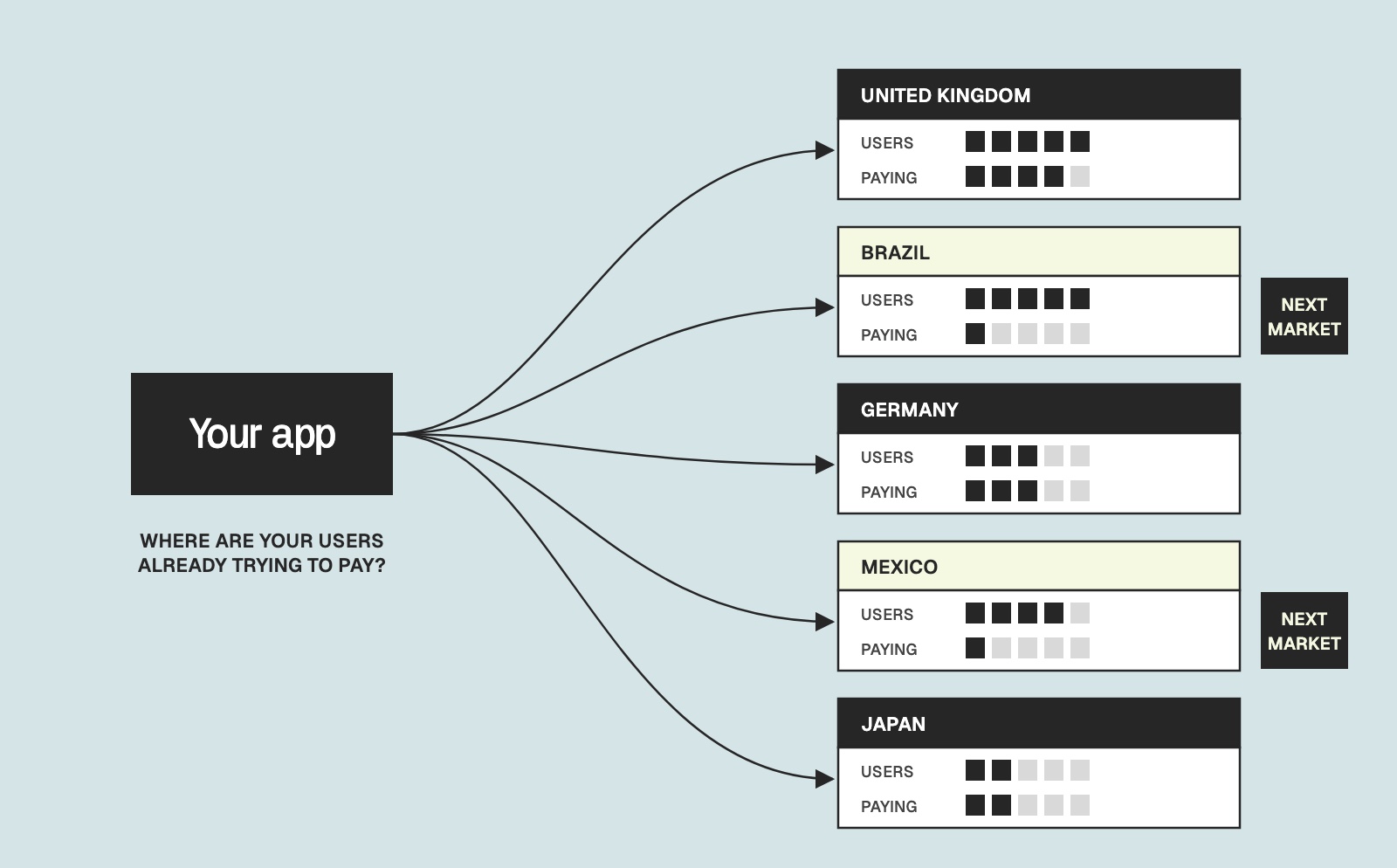
Most 2027 expansion plans are being written now. Many of them start with a list of large countries.
A more reliable starting point is your own data. Users already reach you from many countries. Some of those countries are ready for a proper launch. Others only look weak because buyers can’t pay.
This guide shows how to tell the difference, in four steps.
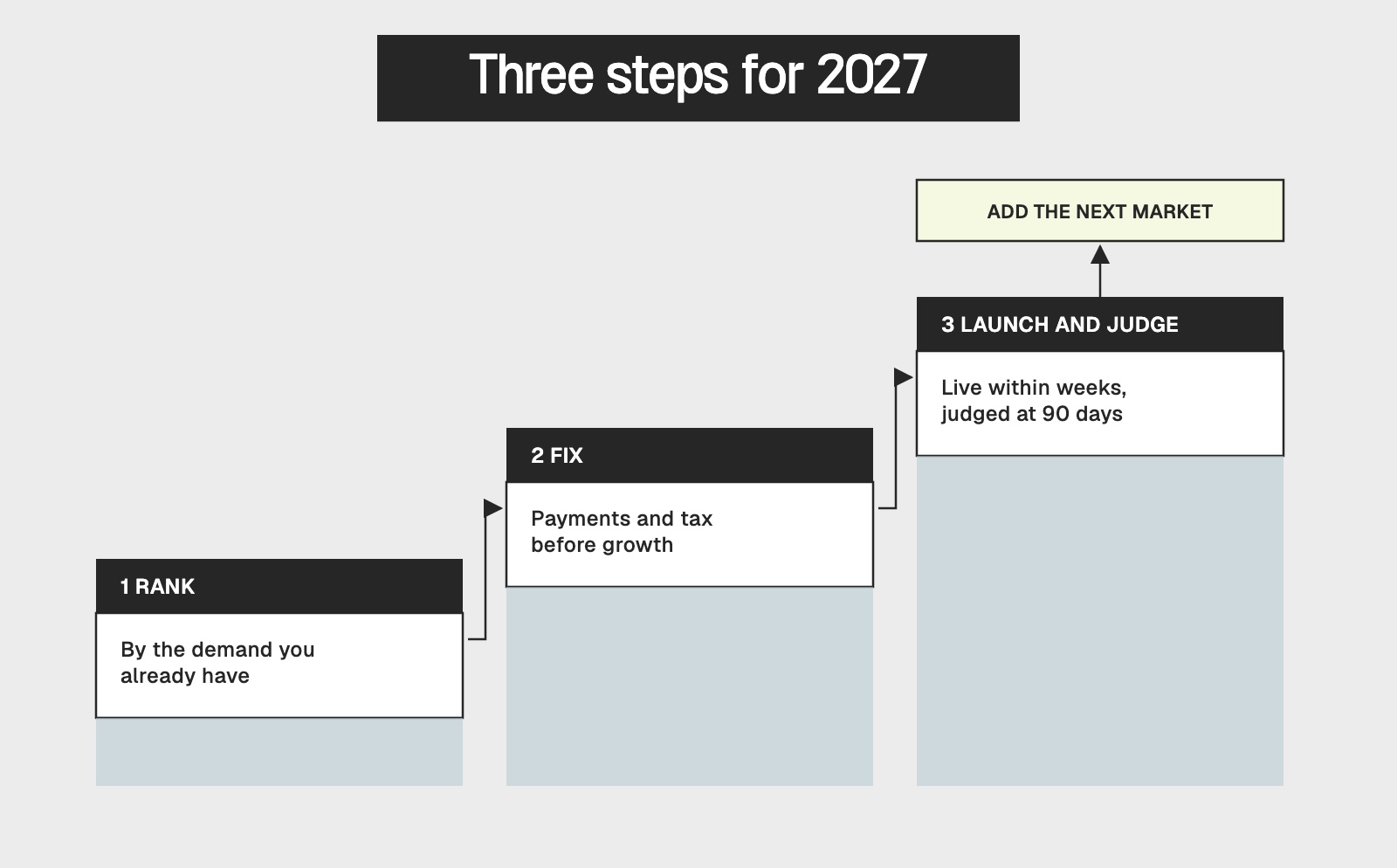
In short: The strongest next market is usually one that already sends you users. Rank countries by traffic, downloads, sign-ups and declined payments. Before you invest, check that buyers can pay the way they pay at home and that the tax is handled. Then launch one market at a time and judge it after 90 days.
Contents
- What’s changing in 2027
- Step 1: Find the demand you already have
- Step 2: Check that each market can pay
- Step 3: Choose how you’ll open the market
- Step 4: Launch, then judge at 90 days
- FAQ
What’s changing in 2027
People spent $167 billion on in-app purchases in 2025, up 10% on the year. For the first time, non-gaming apps took more than games.
The United States is still the largest market. But US in-app spending fell 3% in the second quarter of 2026, while the United Kingdom, Germany and France added $500 million between them on the year before.
How apps sell is changing too. Since a 2025 US court ruling, iOS apps in the United States can link users to a web checkout. The fee Apple can charge on those sales is still unsettled.
Selling on the web means you handle more yourself. That includes payments abroad and the tax on each sale.
Step 1: Find the demand you already have
Most expansion plans start with population, language or a competitor’s last launch. A common brief is simply “it’s an English-speaking country, let’s go there.”
Your own data is a better guide. Look in four places:
- Web analytics: traffic by country, and how fast each is growing.
- App store consoles: downloads and chart rank by country. A move into a country’s top 200 is a strong sign.
- Sign-up data: accounts created by country, compared with paid accounts.
- Payment data: declined payments by the country of the buyer’s card.
Then compare users with paying users in each country. The biggest gap usually points to your best opportunity. Demand is there, but it isn’t turning into revenue yet.
Step 2: Check that each market can pay
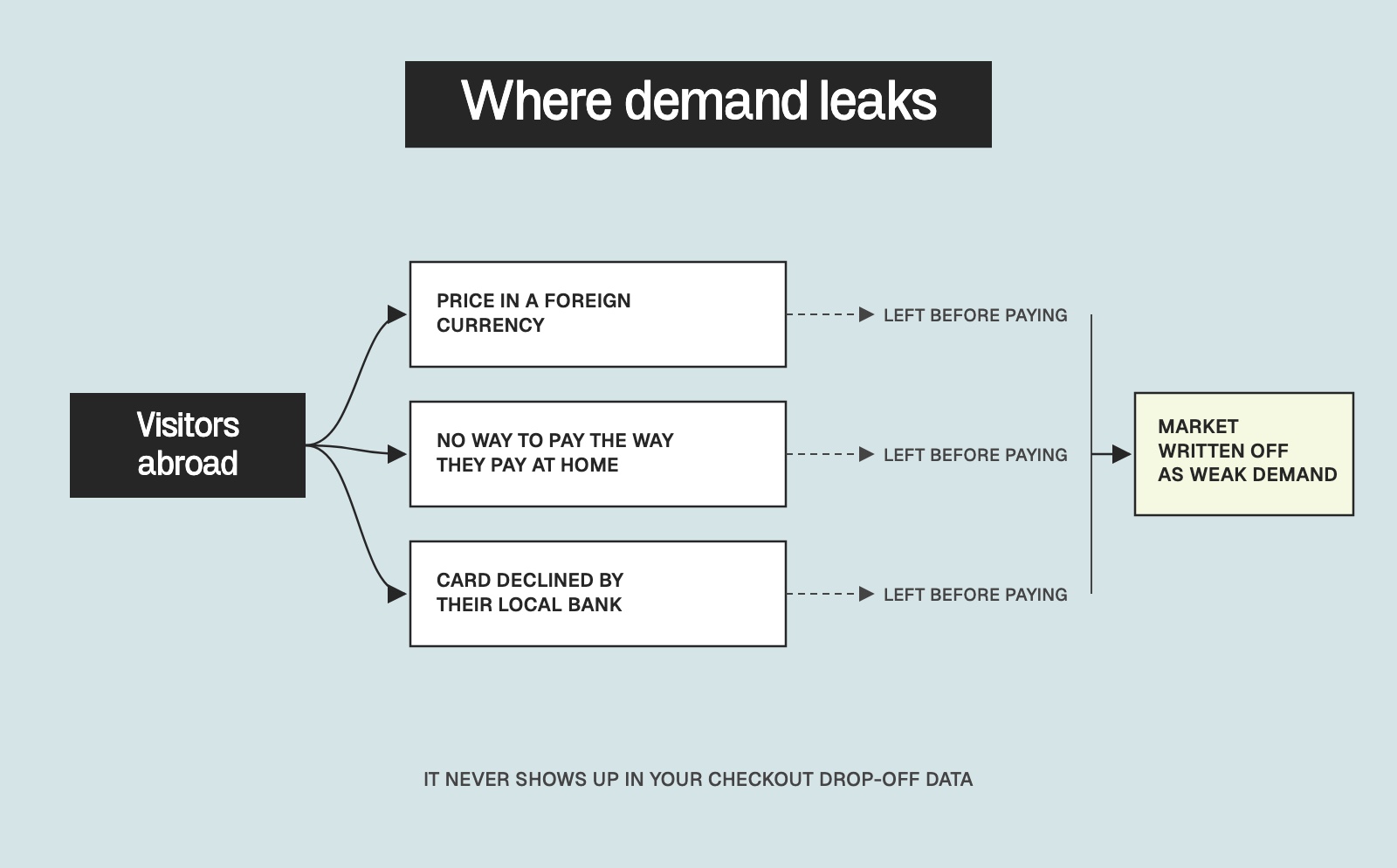
Visitors abroad often leave before they pay. They see a price in a foreign currency. They can’t use the payment method they use at home. Or their bank declines the card, because the seller is abroad.
Most of these buyers leave before checkout starts. So they rarely show up in drop-off data, and the market looks like weak demand.
Local prices are a good first test. In PayPal’s 2018 survey of cross-border shoppers, 34% named prices or payment in their own currency as a reason to buy from a store abroad.
For each country on your shortlist, check five things:
- Prices: are they shown in the local currency, with tax included where the law requires it?
- Payment methods: can buyers use what they use at home, such as Pix in Brazil or OXXO in Mexico?
- Approval rate: how does it compare with your home market?
- Tax: are you registered, and is the right tax charged at checkout?
- Filing: who files and remits the tax, and who answers the tax office?
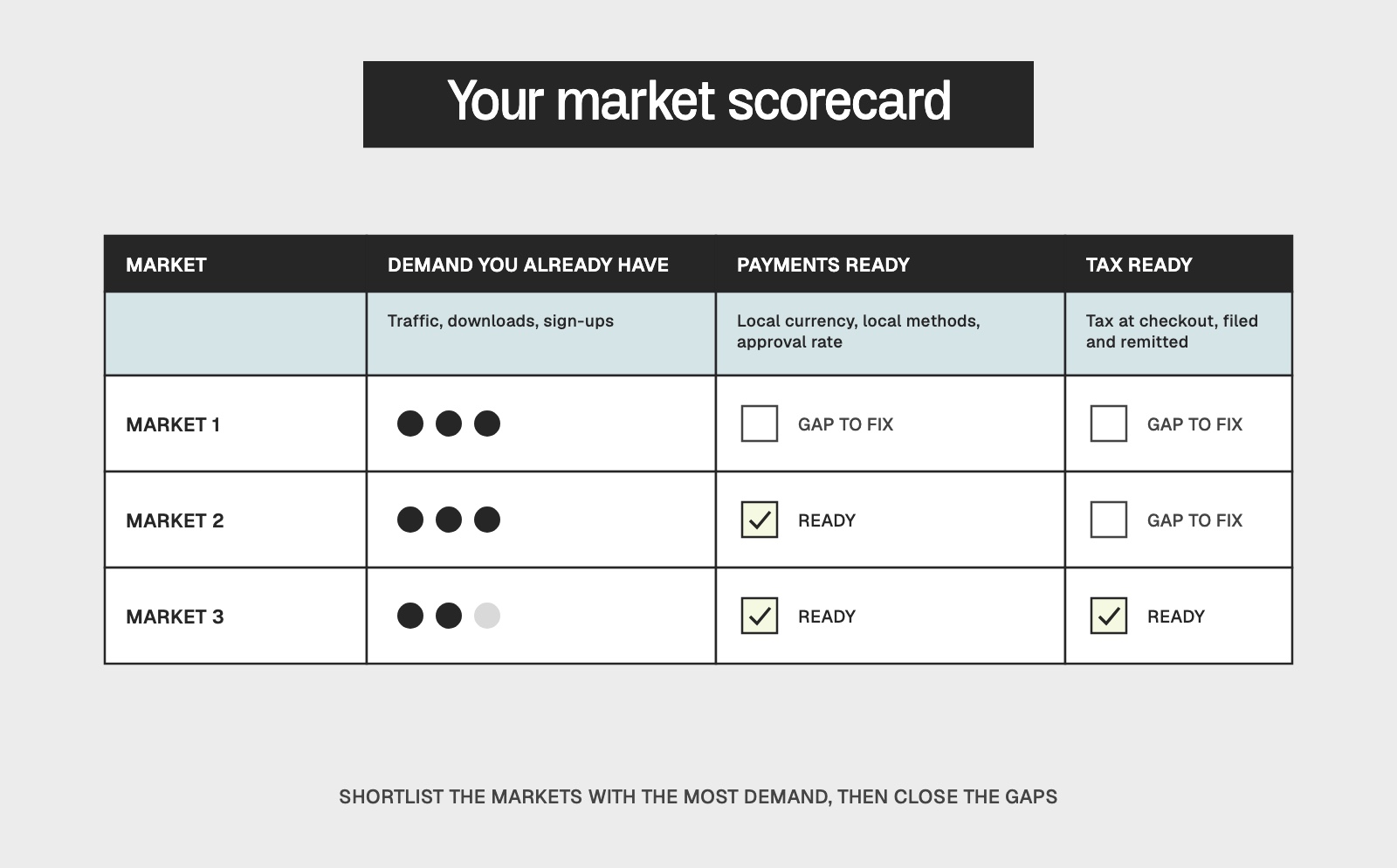
Score each country on demand, payments and tax. Your top three by demand are your shortlist. The gaps are your to-do list.
Step 3: Choose how you’ll open the market
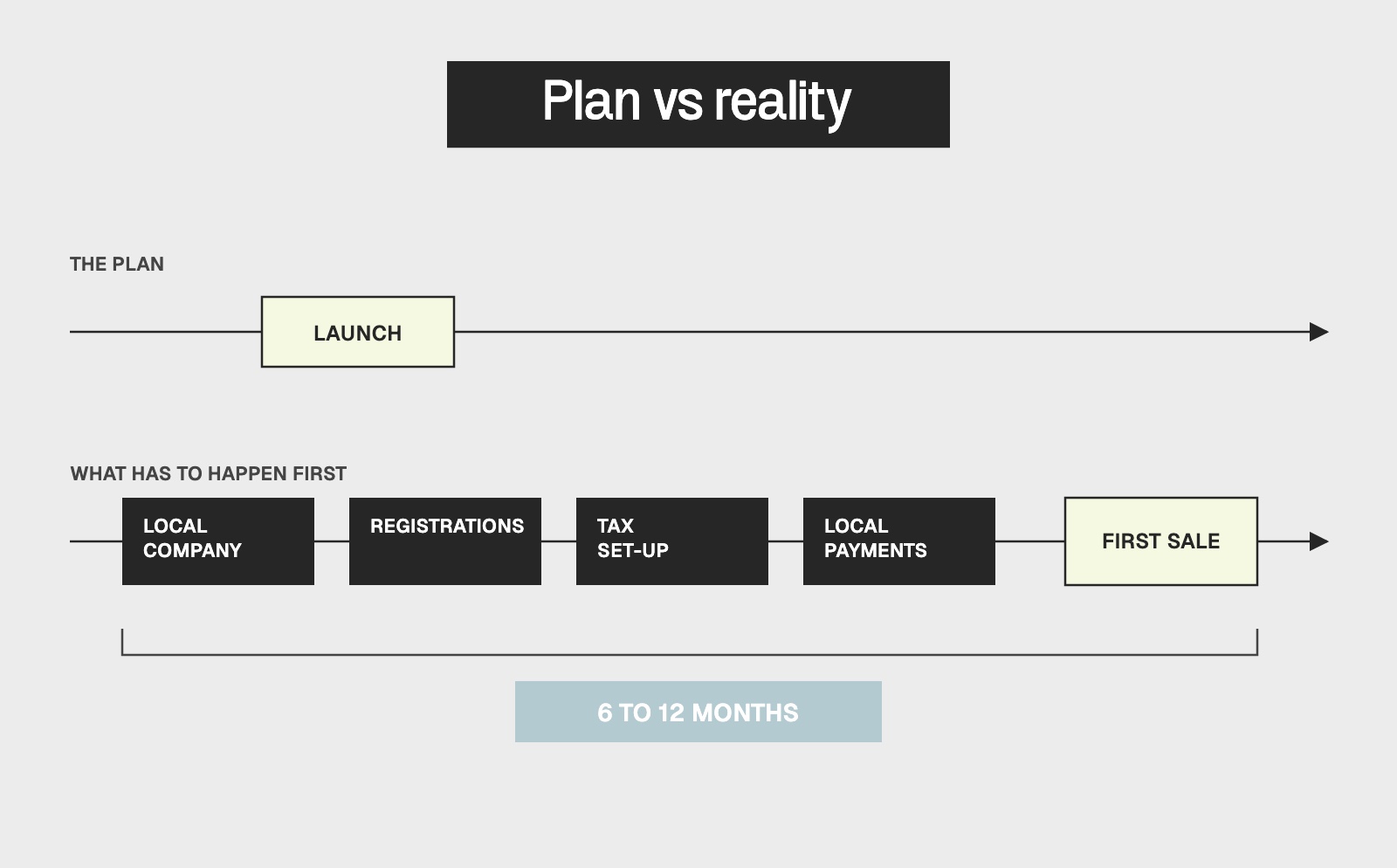
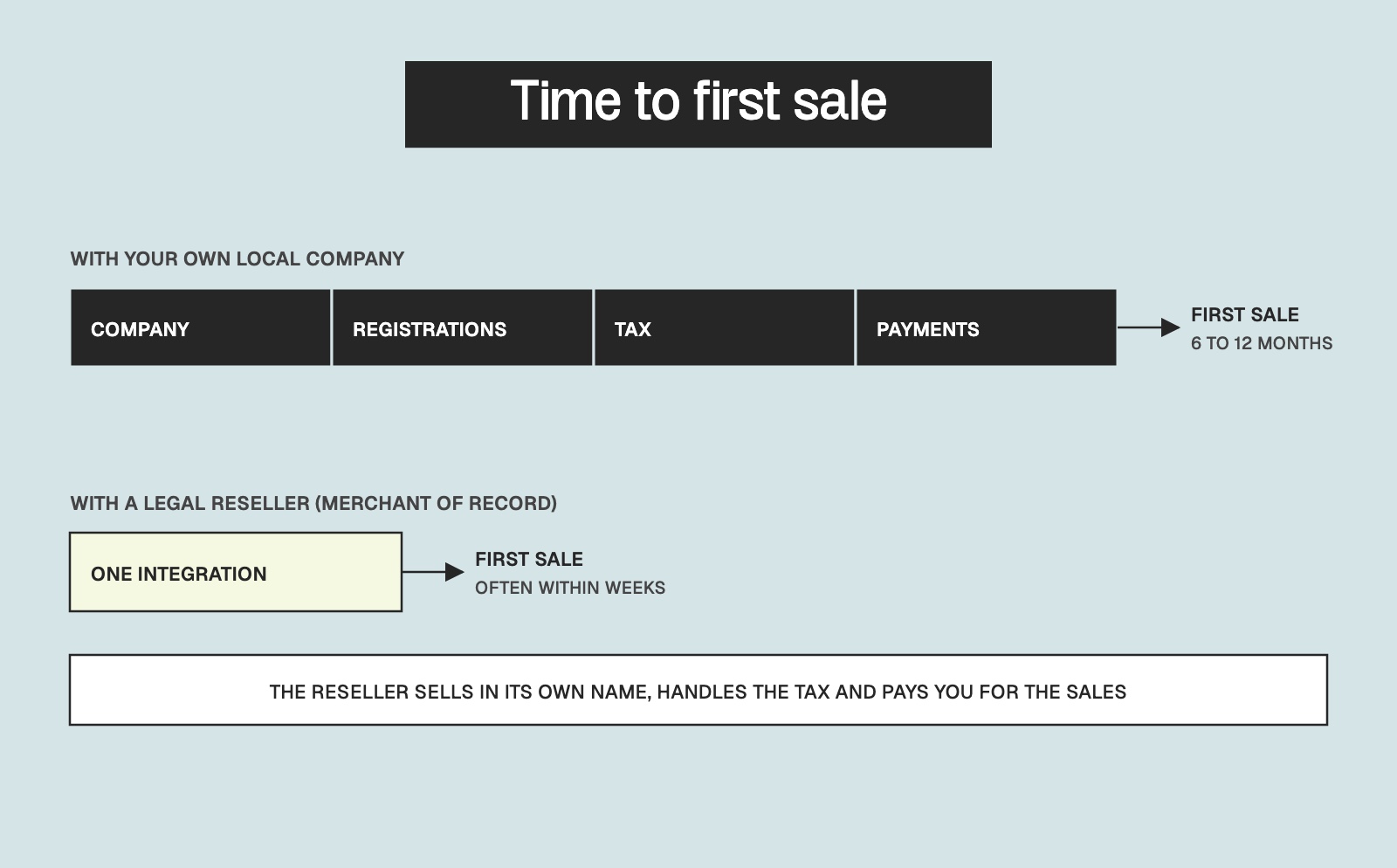
Opening a market takes longer than most plans allow. A local company, registrations, tax set-up and local payments can all come before the first sale. That often takes six to 12 months.
There are three common ways to open a market. Each suits a different stage.
1. Your own local company
- Gives you: full control of the sale, the brand and the customer relationship.
- Costs you: time and running costs. You need registrations, local accounts and filings, and often local staff.
- Suits: markets that are already large and proven for you.
2. A local or regional payment provider
- Gives you: local payment methods, often quickly.
- Costs you: you usually stay the foreign seller. Tax registration and local invoices may still be yours. Card payments can still be treated as cross-border.
- Suits: markets where payment methods are the main gap.
3. A legal reseller, also called a merchant of record
- Gives you: a seller that sells to your customers in its own name, then pays you. Payments can be treated as domestic, and the reseller is the taxpayer on those sales.
- Costs you: a fee on each sale, and less direct control of the sale.
- Suits: testing or growing a market before you commit to a local company.
- Where Outpost fits: this is the option Outpost offers. We become the legal reseller globally, and on the sales we cover, we’re the taxpayer. We work with your existing payment provider and checkout.*
If you compare resellers, ask three questions. Does it work with your current payment provider and checkout? Is it truly local in each country you need? Is its price set per market, or one flat rate everywhere?
Step 4: Launch, then judge at 90 days
Open one market at a time. That way, you can see what works before you add the next.
After 90 days, judge the market on three numbers:
- approval rate compared with home
- conversion from visitor to paying customer
- net revenue after fees, currency conversion and tax
Don’t judge it on downloads alone, and expect the first 90 days to be slower than you planned, even after a smooth launch. Then move to the next market on your shortlist.
FAQ
Should I choose my next market by its size?
No. Start with the countries where you already have users, sign-ups and declined payments. That demand is already there.
Is it better to launch in a few countries first?
Yes, for payments and tax. Your app can be available worldwide while you set up payments and tax one market at a time.
Does showing local prices make the payment local?
No. The price on screen can be local while the payment is still treated as cross-border. The buyer’s bank may still add a foreign transaction fee.
Do I owe tax from my first sale abroad?
Often, yes. For digital sales, many countries have no registration threshold. Check each market before you launch.
Can I sell in a new country before setting up a company there?
Yes. A local payment provider or a legal reseller can get you selling first. In each case, check who the seller is and who owes the tax.

